
Guide · Updated October 22, 2026
A pipe burst. What do I do right now?
The short answer
Shut off the main water valve, stay out of standing water near anything electrical, move what you can out of the water, photograph everything, then call a water damage restoration company. The EPA says water-damaged areas should be dried within 24 to 48 hours to prevent mold, so start right away.
1. Stop the water
Find the main shutoff valve. It’s usually where the water line enters the house: in the basement or crawl space along the front wall, near the water meter, or in a utility closet. Turn it clockwise until it stops.
Then open a cold tap at the lowest point in the house to drain the water left in the pipes.
2. Make it safe
Don’t walk into standing water if outlets, cords or appliances are in it. If you can reach the breaker panel without standing in water, switch off power to the wet areas. If you can’t, wait for an electrician or the utility.
Watch the ceiling under the leak. A bulging, sagging ceiling can hold a lot of water; keep people out from under it.
3. Protect what you can
Move what water hasn’t reached yet, and lift what it has.
- Electronics, documents and photos first
- Rugs off wet floors so they don’t stain what’s underneath
- Furniture legs onto blocks or foil
- No household vacuum on water
4. Document it for your insurance
Take photos and video of the water, the damage and the pipe before anything is moved or thrown away. If a plumber cuts out the broken section of pipe, keep it. Keep receipts for anything you spend because of the damage.
5. Why the clock matters
Water wicks up drywall, soaks into insulation and spreads under flooring, far past what you can see. According to the EPA, if wet materials are dried within 24 to 48 hours, in most cases mold will not grow.
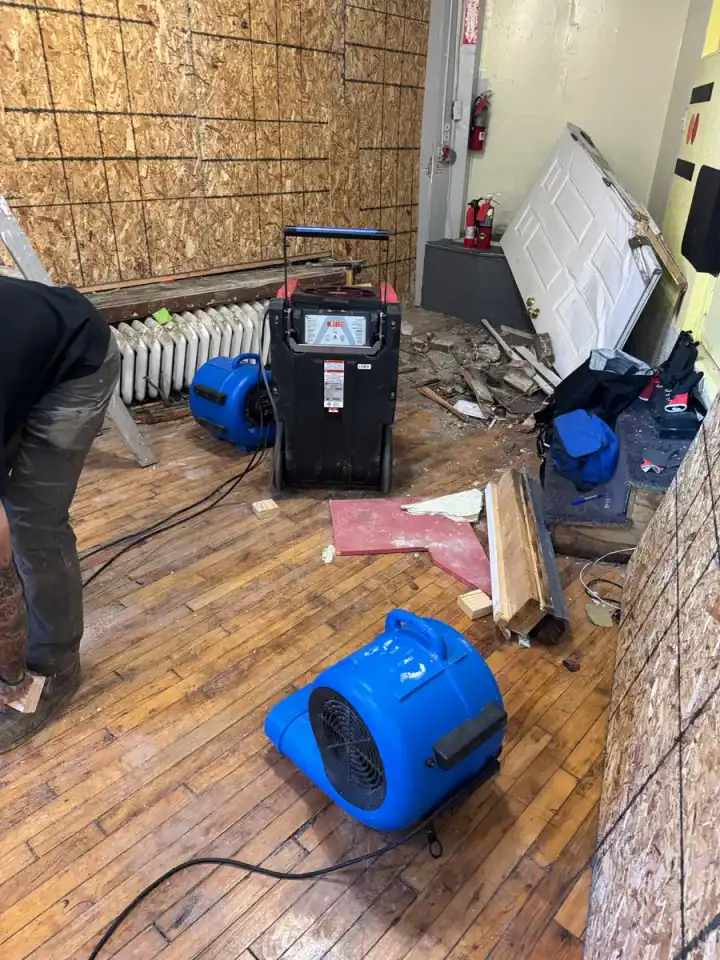
“Looks dry” isn’t dry. Professional drying uses air movers, dehumidifiers and moisture readings to confirm walls and floors are actually dry before the equipment comes out.
Frozen pipes
Pipes in exterior walls, crawl spaces, attics and unheated basements are the ones that freeze. Water expands by about 9% when it freezes, which is enough to split a pipe; the leak usually shows up when it thaws.
To prevent it in a cold snap: keep the heat on, even when you’re away; let a faucet on an outside wall drip; open the cabinet doors under sinks so warm air reaches the pipes; and disconnect garden hoses before winter.
General guidance from Reliance Restoration, a restoration contractor. Every home, policy and situation is different; for anything urgent, call us or your insurer. Published October 22, 2026.
Questions
People also ask
Should I call a plumber or a restoration company first?
Both. A plumber fixes the pipe; a restoration company removes the water and dries the structure. Shut off the water first, then call. Drying can start while the pipe is being repaired.
Does homeowners insurance cover a burst pipe?
Sudden, accidental water damage from a burst pipe is often covered by homeowners policies, while damage from a slow leak or lack of maintenance often isn’t. Every policy is different, so check yours or ask your agent.
More guides
24/7 emergency service
Something happened? Call now.
(215) 395-9978Tell us what happened and where. We’ll tell you what to do until we get there, then we handle it from start to finish.