
Guide · Updated October 22, 2026
How fast does mold grow after water damage?
The short answer
Mold can start growing on wet materials within 24 to 48 hours, so drying water-damaged areas within that window is the best prevention. According to the EPA, a patch smaller than about 10 square feet (roughly 3 ft by 3 ft) can usually be cleaned yourself. Larger areas, mold in the HVAC system, or mold after sewage or other contaminated water call for a professional.
Why 24 to 48 hours
Mold spores are everywhere; they only need moisture to grow. The EPA puts it simply: the key to mold control is moisture control. It advises drying water-damaged areas and items within 24 to 48 hours to prevent mold growth.
Signs of hidden mold
Mold often grows where you can’t see it: behind drywall, under flooring, above ceilings. Watch for:
- A musty smell that doesn’t go away
- Stains, discoloration or peeling paint on walls and ceilings
- Warped flooring or baseboards
- Allergy-like symptoms that ease when you leave the house
What you can clean yourself
For small patches on hard surfaces, the EPA recommends scrubbing with detergent and water, then drying completely. Absorbent materials such as ceiling tiles and carpet may have to be thrown away if they become moldy, because the mold can be difficult or impossible to remove completely.
Don’t paint or caulk over mold. The EPA notes that paint applied over moldy surfaces is likely to peel, and the mold keeps growing underneath.
When to call a professional
- The mold covers more than about 10 square feet
- There was a lot of water damage, or the water was sewage or otherwise contaminated
- You suspect mold in the heating or cooling system (the EPA says not to run it if so)
- It keeps coming back after you clean it
- You can smell it but can’t find it
What remediation involves
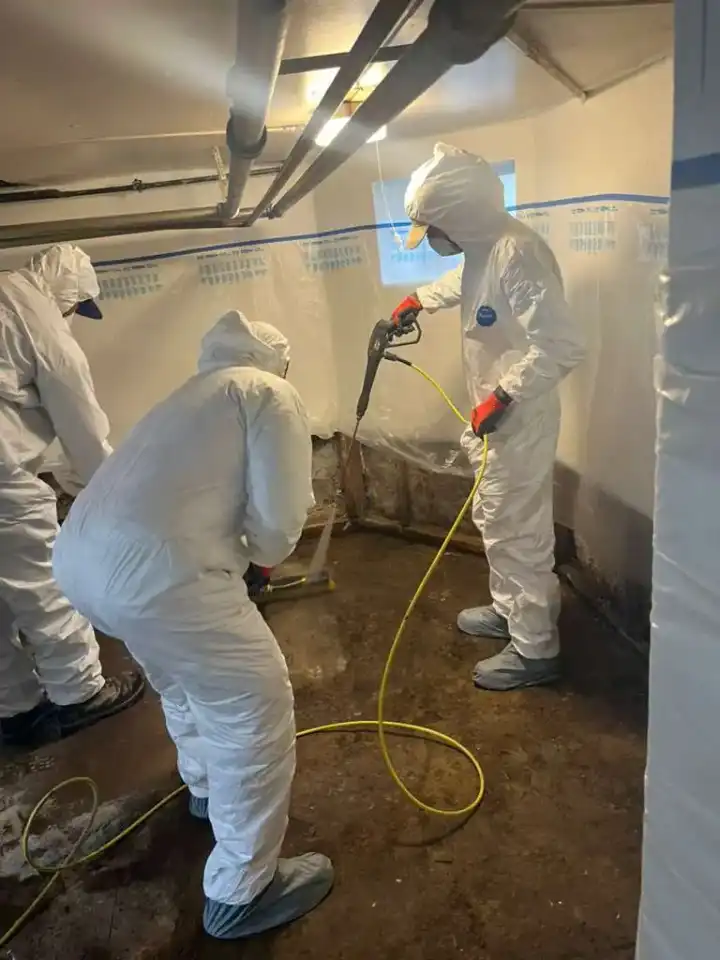
Professional mold remediation starts by finding the moisture source, often with thermal imaging and moisture meters. The area is sealed off with plastic containment so spores don’t travel, affected materials are removed, what stays is cleaned and treated, and the space is dried. Fixing the moisture problem is what keeps it from coming back.
General guidance from Reliance Restoration, a restoration contractor. Every home, policy and situation is different; for anything urgent, call us or your insurer. Published October 22, 2026.
Questions
People also ask
Is mold dangerous?
According to the EPA, mold can cause allergic reactions in sensitive people, trigger asthma attacks in people with asthma who are allergic to mold, and irritate the eyes, skin, nose, throat and lungs, even in people who aren’t allergic.
Can I just paint over mold?
No. Paint applied over mold is likely to peel, and the mold keeps growing underneath. It has to be cleaned or removed, and the moisture fixed.
More guides
24/7 emergency service
Something happened? Call now.
(215) 395-9978Tell us what happened and where. We’ll tell you what to do until we get there, then we handle it from start to finish.